
.svg)
Dangerous Goods and the 9 ADR Classes
Dangerous goods are classified into nine ADR classes based on risk type. See which of them are transported and stored under ADR-approved conditions by road and rail in Europe.
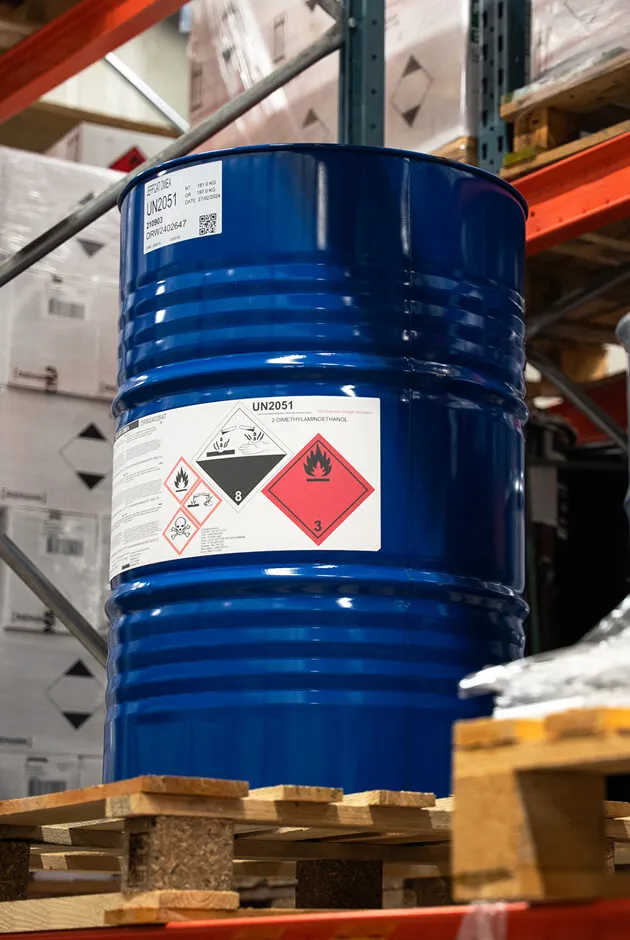
Hazardous materials are goods that, due to their chemical or physical properties, pose a risk during transport, and the rules for handling them are set forth in the ADR Convention, which classifies these substances into nine classes.
H. Daugaard We handle seven of the nine classes. We are SQAS-certified and hold one of Denmark’s most comprehensive environmental approvals for the storage of classified goods (ADR). We transport dangerous goods throughout Europe with daily departures from Denmark, by road and rail, and store them in ADR-approved warehouses along the route.
Which ADR classes do you cover?
We cover Classes 2, 3, 4, 5, 6, 8, and 9. The two remaining classes are Class 1 (explosives) and Class 7 (radioactive materials), which we do not transport. Both require special permits and safety standards that fall outside the scope of our current authorizations.
The classification follows the ADR Convention. The rules governing the transport of dangerous goods by road in Denmark are administered by the Danish Emergency Management Agency. The nine classes are reviewed individually below.
Class 1 – Explosive Substances
Explosive substances can react, causing a sudden release of gas, heat, and pressure.
Class 2 – Gases
Gases under pressure, including compressed, liquefied, and cryogenic gases, as well as aerosols, can react violently in response to temperature changes or a loss of pressure.
Class 3 – Flammable Liquids
Flammable liquids such as gasoline, diesel, and ethanol typically have a low flash point, which makes them flammable even at normal room temperature.
Class 4 – Flammable solids
Flammable solids can ignite due to friction, moisture, or contact with air and must therefore be kept separate from other flammable goods.
Class 5 – Oxidizing Substances and Organic Peroxides
Oxidizing agents and organic peroxides are not necessarily flammable in and of themselves, but they release oxygen and can intensify a fire that has already started.
Class 6 – Toxic Substances
Toxic chemicals can pose a health risk if ingested, inhaled, or if they come into contact with the skin, even in small amounts.
Class 7 – Radioactive Materials
Radioactive substances emit ionizing radiation, which requires special shielding and authorization.
Class 8 – Corrosive Substances
Corrosive substances, such as acids and bases, can damage the skin, eyes, and materials upon contact.
Class 9 – Other Hazardous Substances
This class includes substances that do not fit into the other eight classes, including environmentally hazardous substances, lithium batteries, and magnetic materials.
How do we handle hazardous materials?
We transport dangerous goods by road and rail. Most shipments are transported by road as dangerous goods (ADR), while rail transport is also used for larger quantities.
Classified goods are stored at our ADR-certified storage facilities, either on pallets or in IBC containers—the storage facility in Vamdrup, for example, is designed as a closed system that collects spills and firefighting water rather than discharging them into the ground or the sewer system. We are certified to SQAS, ADR, ISO 9001, and ISO 14001, which attest to our commitment to safety, quality, and environmental responsibility in both transportation and storage.
Get help with the transport and storage of hazardous materials
From the transport of dangerous goods to storage in an ADR-approved warehouse, we’ll find the solution that’s right for your cargo. Our dangerous goods specialists are familiar with the requirements for each class and will help you develop the right plan for transport or storage.
With more than 100 years of experience in the transportation industry, we’re familiar with most of the challenges that can arise along the way. Contact us for a no-obligation conversation about how we can help with your specific shipment.
